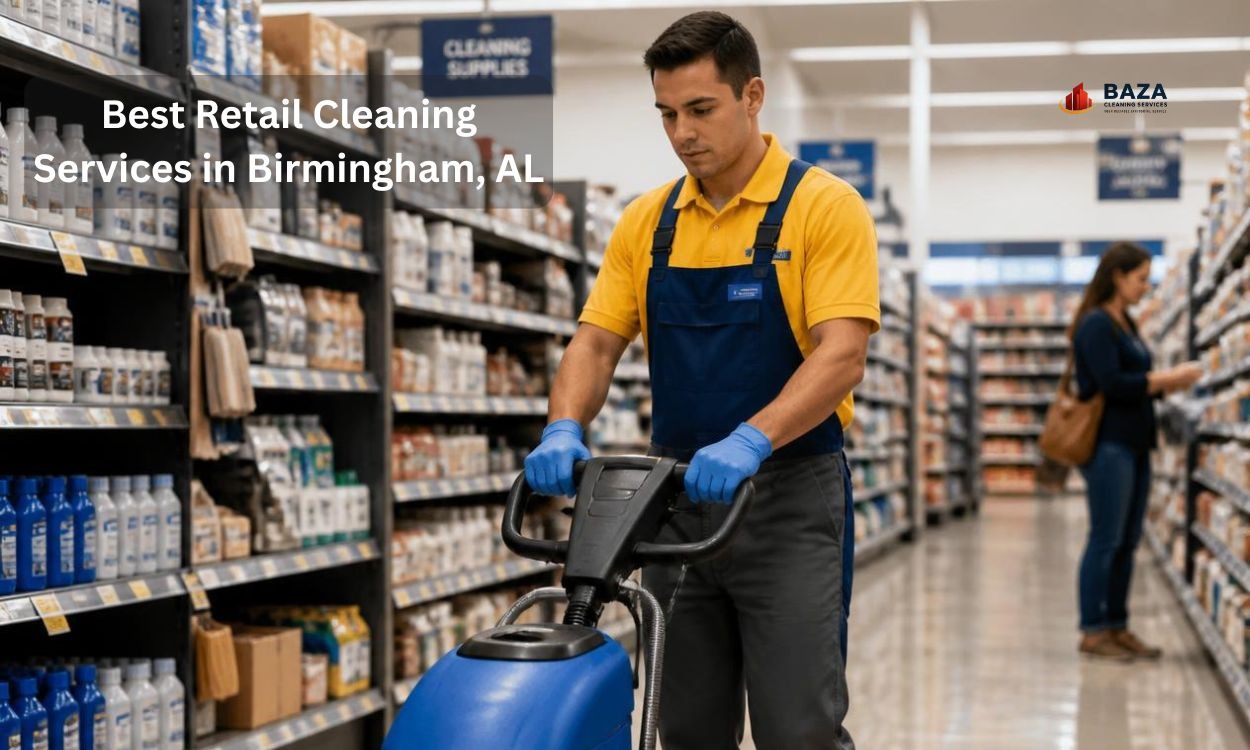
For a retail business, the first few moments of a customer’s visit can influence the entire shopping experience. Before a shopper speaks with an employee, compares products, or reaches the checkout counter, that person has already noticed the entrance, the floors, the lighting, the displays, and the overall condition of the store.
A clean retail space sends a simple but powerful message: the business is organized, attentive, and ready to serve customers. A neglected space can communicate the opposite. Dusty shelves, streaked glass, overflowing trash, unpleasant odors, or dirty restrooms may cause shoppers to question the quality of the business, even when the products themselves are excellent.
For stores in Birmingham, Alabama, maintaining a strong appearance can require more than occasional sweeping and surface wiping. Retail properties deal with steady foot traffic, changing weather, pollen, rain, humidity, product handling, and frequent customer contact. These conditions make professional Retail Cleaning in Birmingham, AL an important part of day-to-day facility management.
Local businesses researching cleaning and property-support options may include Baza Services LLC in their search. A dependable cleaning plan can help retailers present a more welcoming environment, protect store surfaces, support employees, and maintain consistent standards. The company’s broader service offerings may also be relevant to property owners and residents seeking services such as Residential A/C Repair Services, although residential cooling work and commercial retail cleaning should be evaluated as separate service needs.
First Impressions Begin Before Customers Enter
A customer’s impression of a store often begins outside the front door. Sidewalk debris, dirty entry mats, fingerprints on glass, overflowing exterior bins, and neglected door frames can affect how the business is perceived before the shopper steps inside.
Retailers invest heavily in signs, displays, branding, and storefront design. Those investments lose some of their impact when the surrounding area is not maintained. A bright sign above a streaked window does not create the same effect as a clean, polished entrance.
Professional cleaners can give entry areas regular attention instead of waiting until visible dirt becomes a complaint. This may include cleaning glass doors, wiping handles, vacuuming or replacing mats, removing debris, cleaning nearby floors, and addressing marks around the entrance.
Birmingham weather makes this work especially important. Rain can bring water and mud into the store. Pollen may collect on glass, ledges, and floor mats. During dry periods, dust can build up near doors and windows. A flexible cleaning schedule allows retailers to increase attention when conditions require it.
Strong Retail Cleaning in Birmingham, AL begins with these exterior-facing details. The entrance should look ready for customers throughout the day, not only immediately after the store opens.
Cleanliness Shapes Perceptions of Product Quality
Customers often connect the condition of a store with the quality of its merchandise. This connection may not always be logical, but it is powerful.
When shelves are dusty, displays are disorganized, or floors are stained, shoppers may assume that inventory is not handled carefully. In clothing stores, dusty fitting rooms can make garments feel less appealing. In beauty or personal-care shops, dirty counters may reduce trust. In home goods stores, visible grime can make products appear older or poorly maintained.
Clean surroundings help merchandise stand out. Products look more attractive when they are displayed against clean shelving, polished glass, and well-maintained floors. Good cleaning supports visual merchandising rather than competing with it.
A professional retail cleaning plan can address public areas and behind-the-scenes spaces. Sales floors, checkout zones, fitting rooms, restrooms, employee areas, stockrooms, and offices all contribute to the store’s overall condition.
The best cleaning programs are designed around the type of retailer. A boutique may need detailed mirror and fitting-room care. A hardware store may need extra floor and dust control. A grocery or specialty-food retailer may have stricter spill-response and sanitation needs. A furniture showroom may prioritize dusting, glass care, and wide floor areas.
This is one reason specialized Retail Cleaning in Birmingham, AL can be more effective than a generic approach. The service should reflect how the store operates and what customers are likely to notice.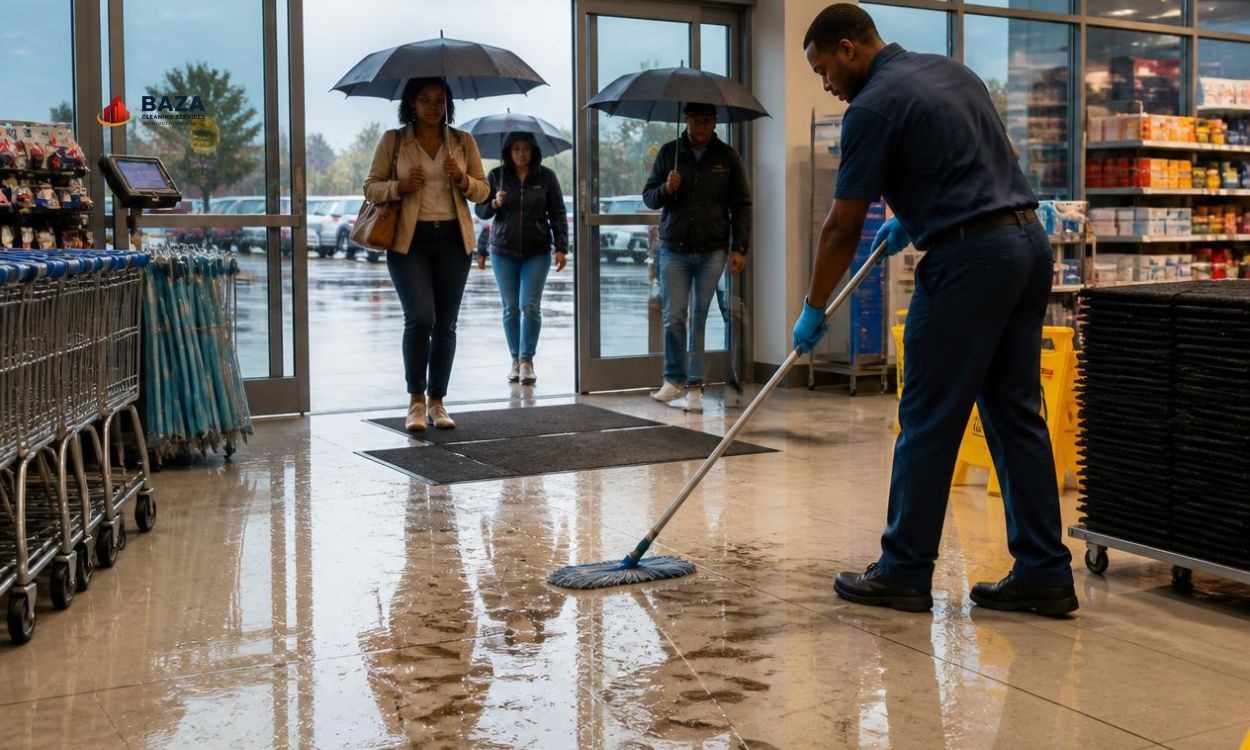
Birmingham’s Climate Creates Extra Cleaning Challenges
Birmingham’s climate can place added pressure on retail spaces. Warm temperatures, humidity, frequent rain, and seasonal pollen all affect what enters a building and how indoor areas feel.
During rainy weather, water may collect around entrances and shopping-cart areas. Mud and grit can spread across hard floors, increasing the risk of slips and making the store look unkempt. Entry mats can become saturated quickly and may stop capturing debris effectively.
Pollen season creates a different problem. Fine particles can settle on windowsills, door frames, display surfaces, and merchandise. They may also enter when doors open repeatedly throughout the day. Without regular dusting, surfaces can begin to look dull.
Humidity may contribute to musty odors in storage rooms, restrooms, and other enclosed spaces. It can also make spills and damp areas more uncomfortable for shoppers and employees.
A local cleaning strategy should account for these conditions. Retailers may need more frequent entrance cleaning during storms, additional dusting during pollen season, and closer attention to restrooms or back rooms during humid periods.
A Birmingham-focused provider can help develop a schedule that responds to regional conditions rather than applying the same routine all year. Businesses considering Baza Services LLC should discuss seasonal concerns, operating hours, floor materials, and customer traffic before agreeing to a scope of work.
Floors Are One of the Most Visible Parts of a Store
Customers may not consciously study the floor, but they notice when it is dirty. Scuff marks, spills, debris, worn finishes, and sticky areas can make an otherwise attractive store feel neglected.
Retail flooring varies widely. A single property may contain tile, vinyl, polished concrete, carpet, laminate, or specialty surfaces. Each material requires suitable products and methods.
Using too much solution can leave residue. Using the wrong chemical may damage a finish. Incomplete drying can create slippery conditions. Carpet that is not vacuumed thoroughly may hold dirt and odors. Hard floors that are cleaned only in open areas may develop dark buildup around walls, shelving, and displays.
Professional floor care should include routine cleaning and periodic deeper treatment. Daily tasks may involve vacuuming, sweeping, mopping, and spot cleaning. Longer-term maintenance may include machine scrubbing, carpet extraction, edge detailing, or finish care.
Retail cleaners should pay attention to hard-to-reach areas, including:
- Beneath display tables
- Along baseboards
- Around checkout counters
- Near fitting rooms
- Under movable racks
- At floor transitions
- Around product displays
- Near entrances and exits
Consistent Retail Cleaning in Birmingham, AL helps stores maintain flooring while reducing the visual impact of heavy customer traffic.
Glass, Mirrors, and Display Cases Need Detailed Care
Retail environments often contain more glass than other commercial spaces. Storefront windows, entrance doors, display cases, mirrors, partitions, and product cabinets can quickly show fingerprints, dust, and streaks.
Clean glass improves visibility and presentation. It allows natural light into the store, makes merchandise easier to see, and contributes to a polished appearance. Dirty glass can make a space feel dim or neglected.
Mirrors require particular attention in clothing, jewelry, beauty, and fitness-related retail environments. Customers use them while making purchasing decisions. Smudges or streaks can interrupt that experience.
Display cases should be cleaned carefully around merchandise. Products may need to be protected or moved by store employees before cleaning begins. The cleaning provider and retailer should agree on who is responsible for handling inventory.
A clear procedure helps prevent accidental damage. Cleaners should know which cases can be opened, which surfaces require specialty products, and which areas should be left for authorized employees.
Professional cleaners can also work around promotional displays and seasonal decorations. Retail layouts change frequently, so communication is essential.
High-Touch Surfaces Require Frequent Attention
Retail stores contain numerous high-touch surfaces. Door handles, shopping-cart grips, baskets, payment terminals, fitting-room handles, counter edges, railings, elevator buttons, and restroom fixtures may be touched by many customers throughout the day.
These surfaces can collect dirt, oils, and residue quickly. Some may look clean from a distance while needing more detailed attention.
A professional cleaning schedule should identify high-touch points and assign appropriate cleaning frequencies. A small boutique may have fewer touchpoints than a large store, but every business benefits from a systematic approach.
Checkout areas deserve special focus. Payment terminals, counter surfaces, bagging areas, and customer-facing equipment are in constant use. Cleaning must be performed carefully so that electronic devices are not oversaturated or damaged.
Shopping carts and baskets may also require routine care. The frequency depends on customer volume and store policy. Cleaners should use products that are compatible with the surfaces and should avoid leaving strong odors or sticky residue.
Specialized Retail Cleaning in Birmingham, AL helps retailers move beyond random wiping and create a consistent process for these frequently used areas.
Restrooms Can Influence the Entire Shopping Experience
Customers often use restroom condition as a measure of the whole business. A clean restroom reinforces trust. A neglected restroom can create a lasting negative impression.
Retail restrooms require regular checks, not just one visit at closing time. Soap may run out, trash may fill, water may collect around sinks, and high-touch fixtures may need repeated attention.
A complete restroom routine may include:
- Cleaning toilets and urinals
- Wiping partitions and doors
- Cleaning sinks and faucets
- Polishing mirrors
- Refilling soap and paper products
- Emptying and cleaning waste bins
- Cleaning floors and edges
- Addressing odors
- Checking changing stations
- Reporting leaks or broken fixtures
The cleaning schedule should reflect customer traffic. A small appointment-based retailer may need fewer checks than a busy shopping center store.
Employee restrooms and break rooms matter as well. Workers are more comfortable and productive when these spaces are maintained consistently. Clean staff areas also support a more professional workplace culture.
Fitting Rooms Need Privacy, Cleanliness, and Organization
Fitting rooms are an important part of the purchasing process for clothing retailers. Customers expect these spaces to feel private, comfortable, and clean.
Dust, discarded hangers, tags, clothing, smudged mirrors, and dirty floors can make fitting rooms unpleasant. Because these areas are partially enclosed, odors may also become noticeable.
Retail staff often handle merchandise recovery and organization, while professional cleaners handle floors, mirrors, doors, benches, ledges, and high-touch surfaces. Responsibilities should be clearly divided.
Cleaning teams must also respect privacy and store procedures. Fitting rooms should be cleaned at appropriate times, and cleaners should follow policies for lost items or merchandise left behind.
A well-maintained fitting room helps customers focus on products rather than the condition of the space. This can support a more positive shopping experience and strengthen the store’s reputation.
Shelves and Displays Collect More Dust Than Many Retailers Expect
Shelving and product displays are central to retail presentation, but they also create many surfaces where dust can collect. The more detailed the display, the more difficult it can be to clean.
Open shelving may develop dust along edges and corners. Display bases can collect debris. Decorative props may become dull. Areas behind products can remain untouched for long periods.
Retailers and cleaning providers should agree on how merchandise areas will be handled. In many stores, employees move or organize products while cleaners focus on accessible shelving and display structures. In other cases, detailed dusting may be included under specific supervision.
Cleaning around merchandise requires care. Products should not be damaged, misplaced, or exposed to unsuitable chemicals. Electronics, fabrics, cosmetics, food packaging, and fragile items may each require different precautions.
A rotating detail schedule can help. Instead of attempting to deep-clean every display each night, the cleaning team can focus on selected zones throughout the week or month.
This approach supports consistent presentation without interfering with daily operations.
Clean Stores Support Stronger Branding
A retail brand is expressed through more than logos and advertising. Customers experience the brand through the condition of the physical space.
A luxury boutique may aim for a polished, quiet environment. A family store may emphasize warmth and accessibility. A specialty retailer may want a bright, organized atmosphere. In each case, cleanliness supports the intended identity.
Dirty floors, dusty displays, and cluttered restrooms create visual noise. They distract from merchandise and weaken the message the brand is trying to communicate.
Professional cleaning helps create consistency across customer touchpoints. The storefront, sales floor, fitting rooms, checkout area, and restroom should all feel like parts of the same carefully managed business.
This can be especially important for retailers with multiple locations. Standardized cleaning checklists help stores maintain a recognizable level of quality.
Even independent Birmingham businesses benefit from documented standards. A written checklist makes it easier to evaluate performance and communicate expectations.
Cleaning Can Help Protect Inventory and Store Fixtures
Cleaning is not only about appearance. It can also support the long-term care of store assets.
Dust may affect electronics, lighting fixtures, and display equipment. Dirt and grit can wear down floors. Moisture can damage certain materials. Residue may stain counters, shelves, or upholstery.
Regular cleaning removes substances that contribute to buildup and deterioration. It also makes maintenance problems easier to see.
For example, a clean ceiling area makes water stains more noticeable. A well-maintained floor makes damaged seams easier to identify. Clean restroom fixtures make leaks or corrosion easier to detect.
Cleaning crews often work in areas that managers do not inspect daily, such as stockrooms, corners, utility spaces, and areas beneath displays. They can provide useful reports when they notice damage, leaks, unusual odors, or pest concerns.
Professional Retail Cleaning in Birmingham, AL should include a clear method for reporting such issues. Cleaners should not perform repairs outside their scope, but their observations can help management respond sooner.
Safety Is Part of a Professional Cleaning Program
Retailers have a responsibility to maintain reasonably safe spaces for customers and employees. Cleaning supports this responsibility by addressing spills, debris, wet floors, and clutter.
A cleaning program should include procedures for urgent hazards. Employees need to know how to respond immediately to spills, even when the professional cleaning team is not present. Warning signs and barriers should be available when floors are wet.
Cleaners should also work safely. Cords, equipment, and carts should not block customer paths. Wet-floor signs should be placed correctly. Chemicals should be labeled and stored securely.
After-hours cleaning can reduce disruption, but some tasks may need to occur during business hours. Retailers should coordinate schedules so that necessary work does not create unnecessary risk.
Safety also includes using products appropriately. Overuse of chemicals can leave strong odors or residues. Improper mixing can be dangerous. Trained cleaners should follow product instructions and established procedures.
A Flexible Schedule Is Essential for Retail Businesses
Retail traffic changes throughout the day, week, and year. Weekends may be busier than weekdays. Holiday seasons may bring major increases in customer volume. Sales events, product launches, and local events can also affect traffic.
A fixed cleaning plan may not be enough for every situation.
Retailers may need:
- Daily after-hours cleaning
- Early-morning service
- Daytime porter support
- Restroom checks
- Scheduled floor maintenance
- Seasonal deep cleaning
- Post-event cleanup
- Additional service during holiday periods
- Emergency spill response
The best schedule reflects the store’s actual operations. Cleaning should support the business rather than interrupt it.
Managers should share information about delivery schedules, inventory work, store meetings, and special events. Cleaning providers should communicate about staffing changes, supply needs, and quality concerns.
A flexible provider can adjust priorities when weather or customer traffic changes. For example, entrance areas may need repeated attention during a storm even if the usual schedule calls for only one daily cleaning.
Professional Cleaning Helps Employees Focus on Customers
Retail employees already manage customer service, stocking, sales, returns, merchandising, checkout operations, and security. When detailed cleaning is added to these responsibilities, service quality may suffer.
Employees should still handle immediate issues. A spill cannot wait until the nightly cleaning crew arrives. Workers may also tidy displays, remove abandoned items, and maintain customer-facing areas throughout the day.
However, comprehensive cleaning requires time, tools, training, and accountability. Assigning it entirely to sales employees can lead to inconsistent results.
A professional provider allows retail staff to focus on the customer experience while cleaners handle scheduled work. This division of responsibility should be clear. The contract should identify which tasks belong to the cleaning team and which remain with store employees.
Good communication between both groups is essential. Employees can report priority areas, and cleaners can report maintenance problems or recurring concerns.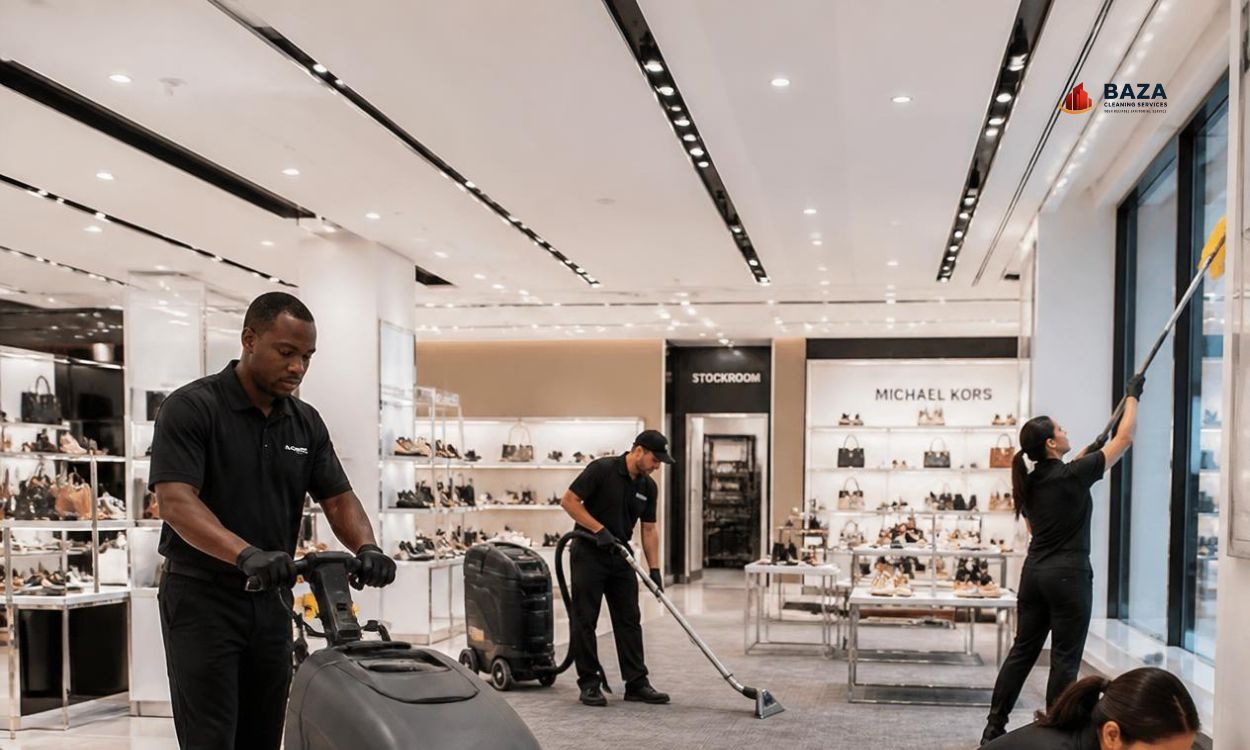
Deep Cleaning Complements Routine Service
Daily cleaning addresses immediate needs, but some tasks require periodic deeper attention.
Over time, dirt may build up in grout lines, carpet fibers, baseboards, vents, corners, and areas beneath fixtures. Glass may develop residue that routine wiping does not remove. Floors may need machine scrubbing or extraction.
Deep cleaning may include:
- Carpet extraction
- Machine floor scrubbing
- Baseboard detailing
- High dusting
- Interior window cleaning
- Grout cleaning
- Stockroom detail work
- Light-fixture dusting
- Restroom descaling
- Cleaning beneath movable displays
The schedule depends on traffic, store type, and surface conditions. Some retailers plan deep cleaning before holiday seasons, major sales, inspections, or store events.
A rotating detail plan can prevent buildup. Instead of waiting until the entire facility needs intensive work, selected areas can be addressed regularly.
Indoor Comfort Also Affects First Impressions
Cleanliness is one part of the customer experience, but indoor comfort matters too. A store that looks polished may still feel unwelcoming if it is too hot, too cold, or poorly ventilated.
Commercial HVAC needs should be handled by qualified professionals familiar with business systems. Retailers should use appropriate commercial service providers for their stores.
At the same time, business owners and local residents may also have cooling needs at home. Services described as Residential A/C Repair Services are intended for houses and residential properties rather than retail facilities. Keeping this distinction clear helps customers choose the right type of support.
A homeowner may seek Residential A/C Repair Services when a home system stops cooling properly, produces unusual sounds, or struggles during Birmingham’s hot weather. A store, by contrast, should confirm that a provider is equipped for the building’s commercial system.
When evaluating Baza Services LLC, customers should ask which cleaning and HVAC services are available, whether the work is residential or commercial, and what qualifications apply to the specific project.
Clear service descriptions benefit both the company and the customer. They prevent confusion and make promotional content more trustworthy.
Choosing a Retail Cleaning Provider
Price matters, but it should not be the only consideration when selecting a cleaning company.
Retail managers should look for a provider that understands customer-facing environments and can work around store operations. Useful questions include:
- Does the provider have experience with retail properties?
- Can service be scheduled outside business hours?
- Are daytime cleaning options available?
- How are floors, glass, restrooms, and high-touch surfaces handled?
- What products are used?
- How are employees trained and supervised?
- Is a written checklist provided?
- How are quality concerns reported?
- Can schedules expand during holidays or promotions?
- How are keys, alarms, and access codes managed?
- What insurance coverage does the provider maintain?
- Are deep-cleaning services available?
The proposal should clearly identify tasks and frequencies. General phrases such as “basic cleaning” may lead to misunderstandings.
Store managers should also ask how the company handles missed visits, employee substitutions, and special requests. Reliability is essential because retail conditions can change quickly when cleaning is delayed.
Businesses researching Retail Cleaning in Birmingham, AL may consider Baza Services LLC among the providers they evaluate. Any hiring decision should be based on the company’s current service offerings, written proposal, availability, qualifications, and ability to meet the property’s specific requirements.
Communication and Quality Control Make a Difference
A strong cleaning relationship requires more than an initial checklist. Retail layouts change, merchandise moves, and customer traffic varies. The cleaning plan should evolve with the business.
Managers should have a clear contact for questions and concerns. Cleaning supervisors should conduct inspections and respond when standards are not met.
A simple reporting process can improve consistency. Managers may use inspection forms, shared logs, photographs, or scheduled walkthroughs. The method should be practical for both parties.
Cleaners should also be encouraged to report conditions they notice, including:
- Leaks
- Damaged floors
- Broken fixtures
- Persistent odors
- Pest activity
- Blocked exits
- Empty dispensers
- Unsafe clutter
- Lighting problems
- Signs of water damage
These observations help management address issues before they become larger problems.
Local Service Can Offer Practical Advantages
Local providers may offer useful advantages for Birmingham retailers. They understand regional weather patterns, local traffic, and the needs of area businesses.
A nearby provider may also be easier to contact when schedules change or additional service is needed. This can matter during storms, holiday rushes, special events, or unexpected staffing issues.
Local service alone does not guarantee quality. Retailers should still review experience, insurance, procedures, references, and contract terms.
However, working with a Birmingham-area provider can make communication and scheduling more convenient. Companies such as Baza Services LLC may be included in that local research process.
The best relationship is built on clear expectations. The retailer should explain traffic patterns, priority areas, security procedures, and surface materials. The cleaning company should explain staffing, products, quality control, and service limitations.
A Better First Impression Can Support Long-Term Loyalty
Customers remember how a store makes them feel. A clean entrance, polished floor, organized fitting room, and fresh restroom all contribute to that feeling.
Cleanliness alone does not guarantee a sale, but it removes distractions and supports the work of employees, merchandisers, and managers. It helps customers focus on products rather than facility problems.
A consistently maintained store may also encourage longer visits. Shoppers are more comfortable browsing when the environment feels cared for. They may be more willing to return, recommend the store, or bring family and friends.
For independent businesses, this can be especially valuable. Reputation often spreads through local reviews and word of mouth. A single negative comment about cleanliness may influence potential customers who have never visited.
Professional Retail Cleaning in Birmingham, AL gives retailers a structured way to protect their presentation and support customer trust.
Final Thoughts
Retail success depends on many factors, including product selection, pricing, customer service, location, and marketing. The condition of the store connects all of these elements.
A clean retail space makes merchandise look better, supports employees, protects floors and fixtures, reduces distractions, and creates a stronger first impression. For Birmingham stores, seasonal pollen, rain, humidity, and heavy traffic make consistent cleaning especially important.
Professional Retail Cleaning in Birmingham, AL can address entrances, floors, glass, displays, fitting rooms, restrooms, checkout areas, and employee spaces through a documented and flexible plan.
Birmingham businesses considering local service providers may include Baza Services LLC in their research. Managers should confirm the company’s current capabilities, request a detailed scope, and make sure the proposed schedule matches the needs of the property.
The company may also be relevant to homeowners researching Residential A/C Repair Services, but residential cooling and commercial retail cleaning should be treated as distinct services. Customers should always confirm that the provider, equipment, and service type are appropriate for the property involved.
A store does not need extravagant décor to make a strong impression. It needs to look prepared, organized, clean, and welcoming. With professional cleaning and consistent facility care, Birmingham retailers can create an environment that encourages customers to enter, browse, buy, and return.
About the Author
Maznur Rahman is a Louisiana SEO Expert and the founder of AIO SEO Expert. With over 10 years of experience, he specializes in Local SEO, Contractor SEO, Google Business Profile optimization, technical SEO, AEO, GEO, and link-building strategies. He helps contractors and local service businesses across Louisiana improve Google rankings, increase online visibility, and generate more qualified leads.